One of the fortunate side effects of this year’s Presidential election is the demonstration of the inability of the national government to manage the actual mechanics of an election in 50 diverse states and territories. I say, ‘fortunate’ intentionally because by now our denial of the facts is painfully obvious concerning hundreds of law suits over ballot counting, the reasonable number of precincts for voting, and even matters as apparently trivial as that the receptacles for deposit of completed ballots all appear to be running with no ordaining national standards. As I have quoted earlier and elsewhere Section 4 of Article I of the Constitution;
The Time, Places and Manner of holding Elections for Senators and Representatives, shall be prescribed in each State by the Legislatures thereof; but the Congress may at any time by Law make or alter such Regulations, except as to Places and chusing of Senators. (bold emphasis added )
This broad authority which is intentionally reserved for Congress needs to be asserted to begin to create a system that is less porous to fraud and abuse. This, or course does not get at the scandal that is the Electoral College and the chicanery over Presidential elections and the role of political parties and money bundling that assures that only a candidate approved by one of the two main political parties can rise to office of President, but it does allow the national government to insure the rights of the people to vote and have their votes counted and the tally verified. Paper ballots remain the gold standard still in that regard; and democracy itself is only a dream if these weaknesses are not corrected.
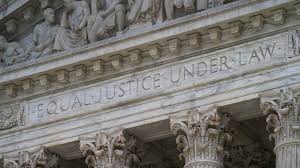 The little pocket Constitution from which I gathered the above quote is one that the government prints for free distribution (Twenty-Fifth Edition). On the back of the cover is a quote from John Marshall, who first put real power behind the idea of judicial review by the Supreme Court; “a constitution, intended to endure for ages to come, and consequently, to be adapted to the various crises of human affairs.” This would appear to be a very early summary of the argument against originalism and textualism. We shall soon see if the United States government is capable of saving itself from some of its worst habits, and if the as yet unmet promise of ‘consent of the governed’ and ‘majority rule with full minority rights’ will be honored in fact.




 Those barriers which hinder or obstruct our progress can be called the primary impediments to creating a republican form of socialism. By republican socialism I mean a version of popular government that has impartial, open elections with results that can be verified as the actual will of the people, not a gerry-rigged farce that has excluded many of the countervailing forces that democracy encourages. The socialist element comes from the fact that socialist leaning voters of many strips see the redistribution of the benefits and amenities of a complex modern economy as pieces in the negotiable social contract that determines who our representatives are and how the fruits of our labors are apportioned through taxes and programs that are created to benefit everyone. The cant and lie of the current formula is that ‘the job creators’ or the investment and banking elements deserve the bulk of society’s wealth as they are, to use the old rubric of the Chinese imperial dynasties, ‘the masters of the earth’. Under that system those arrangements would continue to apply as long as the leadership enjoyed ‘The Mandate of Heaven’, which usually came to mean that as long as there was stability and the sense of forward progress and social order, the group in charge should continue to rule. In the United States today it’s apparent our masters have lost their mandate. It is our task to replace them by way of the ballot box.